Two ways to work with us.
One flagship install that runs the same three phases every sprint, and one seat we fill by invitation and referral. Both start with the same questions: where the business is headed, what it's missing, and what that's costing you.
The Owner-Optional Install
Not consulting. Not coaching. An install. Twelve months, worked in 90-day sprints, with an OpenCXO operator working alongside you.
Not a framework. Infrastructure.
Frameworks give you the meeting. We build the systems the meeting reviews: roles, rules, follow-up, quoting, handoffs, the dashboard. Inside your business, on your tools, yours to keep.
Built beside you. Not handed to you. Not dumped on you.
Through the first sprint you work one-to-one, weekly, with an OpenCXO operator. Not a coach with a question list. A builder with a laptop, inside your business, next to your team. After that, the cadence you choose: quarterly at the least, monthly if you want us closer.
Most programs upgrade the founder. We build the business to need less of you.
When the install is done, decisions get made, problems get solved, and sprints get run while you're somewhere else. That is what exit-ready looks like, whether the sale is two years out or never happening.
The first weeks
The Scorecard, then the Business Audit inside the business the way a buyer would: interviews, the numbers, the calendar, the pipeline. Constraints named with dollars attached, the first systems defined with a definition of done you approve in writing, and quick wins identified right out of the gate.
You walk out with a written plan and a straight answer on where the hours, the margin, and the momentum are leaking.
The first sprint
The named systems get built and put into use. Roles and rules written down. The dashboard live. The weekly leadership meeting running, with us in the room until your team fully owns it. AI on the repetitive work before you hire against it.
By the end of the first sprint, every role has an owner, every number has a face, and the meeting rhythm runs whether you show up or not.
Sprints two through four, and on
Compound the system and move toward your exit. Each sprint starts by re-reading the numbers, confirms the next constraint is still the next constraint, builds against it, and measures. Your leadership team carries the cadence, us included. We keep the system sharp on the schedule you choose.
A business that doesn't need you in it, and an owner with real options.
Three systems running without you by the end of the first sprint, or we keep working free until they are. Month to month on paper, no long contract. Typical engagements run twelve months and beyond, and the expectation on both sides is that we work together until it holds.
The audit picks the track.
Both tracks run at the same rate, set in the audit, in writing, before you commit to anything. Plenty of businesses need both. We run those in sequence and the number never goes up because the audit found more. Client count stays low on purpose. Month to month on paper, and everything we build is yours to keep.
Whatever the business actually needs.
We build to the diagnosis, not from a catalog. Sometimes the answer is process and ownership. Sometimes the software your industry sold you is the constraint and the answer is to replace it. Usually it's both. A few screens from a build in progress.


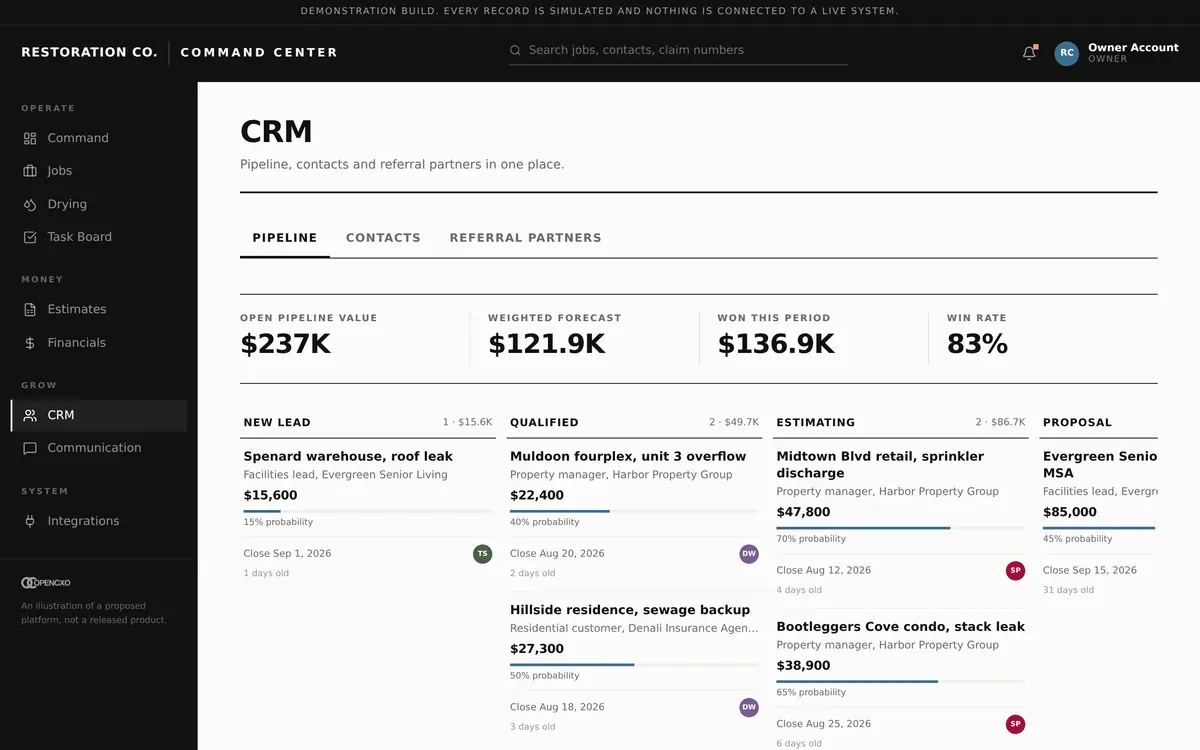


Screens from a live build. Every record in it is simulated and the client's name is removed. Yours get built to your business, on your data, and you own them.
Exit doesn't have to mean selling. It means having the option.
Five levels of owner-optional. Most owners only ever picture the last one. We build toward the one you actually want, and we make the business ready for it before you get there.
Out of the work
You stop doing the jobs. Quoting, scheduling, chasing invoices, answering the same question five times a day. Systems and people carry them.
Out of the day-to-day
You stop managing the week. The leadership meeting runs, the dashboard reports, the team decides inside written rules.
Out of the org chart
You stop holding a seat. A leadership team runs the business and you lead it from above, not inside.
Out of the decisions
You stop being the deciding vote. The three-year picture and the sprint plan set direction, the team executes, you review.
Out of ownership
You sell, hand it down, or bring in a partner. On your timeline, at a price that reflects a business that doesn't need you.
Whether the sale is two years out or never happening, the build is the same. The business has to work without you first.
What's included
- ✓Business Audit with a written definition of done
- ✓Systems built to the diagnosis, not from a catalog
- ✓Dashboard connected to the books
- ✓Weekly leadership meeting, run by us through the first sprint
- ✓Roles and rules written down
- ✓AI on the repetitive work before headcount
- ✓Everything built is yours to keep
- ✓Three systems running without you by the end of the first sprint, guaranteed
We're selective on purpose. A handful of installs run at a time, so each one gets an operator who's actually doing the work.
Operator in Residence
A seat at the table, and skin in the game.
For an owner, investor, family office, or private equity team that wants a senior operator inside the business long term. A partner with visibility into the P&L and accountability for it, who sets the objectives and outcomes that move the business toward the target and works them until they're hit. An operator who has sat on both sides of the table, buyer and seller.
Who this is for
- ✓A real business with real profit, and a ceiling you keep running into.
- ✓A destination: an impending sale, a step back from the daily, or a number the business has never hit.
- ✓A leadership layer that's missing or thin, and the will to build it.
- ✓Room for one more voice at the table, with a vested interest in the outcome.
Profit and cash
Margin by job type, cash days on hand, a close that lands on time. The numbers a buyer reads first, made true first.
Operations and systems
The full operating system above, installed and run, so the business doesn't need the owner in the room.
Leadership and team
A second in command, accountability by role, and the hires the plan needs, scoped and coached through their first sprint.
Value and exit readiness
A written valuation read: where a buyer would discount the business today, and the plan to close each gap before it goes to market.
The same three phases, scoped deeper
Clarify
A conversation first, then the Business Audit at partner depth: the numbers, the calendar, the pipeline, the leadership bench, and the way a decision actually moves through the company. It ends in a written plan, a destination with a number on it, and the objectives this seat gets held to.
Systematize
The operating system installed, with more of the build owned by us. Roles and rules written down, the systems that carry the repetitive work, the dashboard connected to the books, and the leadership cadence run from inside the business until your team owns it outright.
Scale
Sprint after sprint against the target. Each one re-reads the numbers, confirms the next constraint is still the next constraint, and builds against it. Longer arcs sometimes pair the retainer with equity or profit share, so the outcome pays both sides.
By invitation and referral only. Priced by engagement. It starts with a conversation, not a scorecard.
Not sure which one?
Take the Scorecard. Ten minutes, five pillars, and a straight answer on where the business stands. The audit takes it from there.
Take the Business Scorecard